top of page


Introduction

The Protected Landscape of the Serra Bèrnia and Ferrer is a set of coastal and pre-coastal mountain ranges, characterized by its rugged landscape

The Bèrnia mountain range is located in the dividing line between the counties of Up and Down Marinas, in the Valencian Country.

`PROTECTED
Natural
LANDSCAPE
These spaces are distributed throughout Andalucia, Extremadura, Murcia, Comunidad Valenciana Aragón, Navarra, Asturias, Galicia, Castilla-La Mancha and Canary Islands. In addition, of the natural values, for its declaration the landscaping and esthetic ones were considered, of course.

Serra de Bèrnia i Ferrer is considered a LIC, ZECA and is in the 2000 network, that is, it is a zone of special protection for birds and a place of community importance and consequently to the 2000 network


The Bernia range is 11 kilometers long and extends in a perpendicular direction to the coast, from the Bolulla fault to the west to the Nose of the Toix to the east, where it submerges in the waters of the sea Mediterranean. The mountains have an extension of 1,900 hectares, distributed between the municipalities of Callosa, Altea, Calp, Benissa and Jalon.


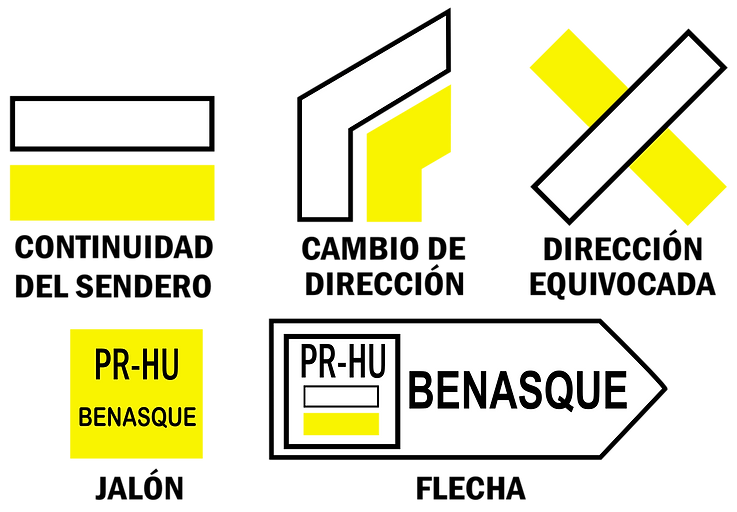
On the day of nature, we have made the PR-CV 7 path, that is, a small circular path. It is a signposted itinerary for pedestrians, formed by the connection of paths, paths, rattlers, tracks, etc., which avoid as much as possible the traffic on asphalted roads and with vehicle traffic. The P.R.-C.V. They have a length that ranges from a minimum of 10 km and a maximum of 50 km. In the case of exceeding 50 km, we would be talking about a GR or a long path. To signalize these paths, a series of resources and tools are used below. The small paths are marked with white and yellow paint marks, unlike the GR that are marked with red paint, which can be made in different places: in stone, on the trunk of a tree, etc.
These paint marks are represented in parallel when the direction we follow is correct, and forming a blade with the white strip on the yellow (cross of Sant Andreu) when the direction is wrong. Sometimes they appear with a strong angle that indicates a sudden change of direction. Cross-parallel signals can also appear with a white line, which indicates a variant of the path.


bottom of page